Paper accepted for publication in µLife
13.07.2026Our article, "The CRISPR/Cas-associated scaRNA modulates efeUOB expression and stress responses in Neisseria meningitidis" has been accepted for publication in µLife.
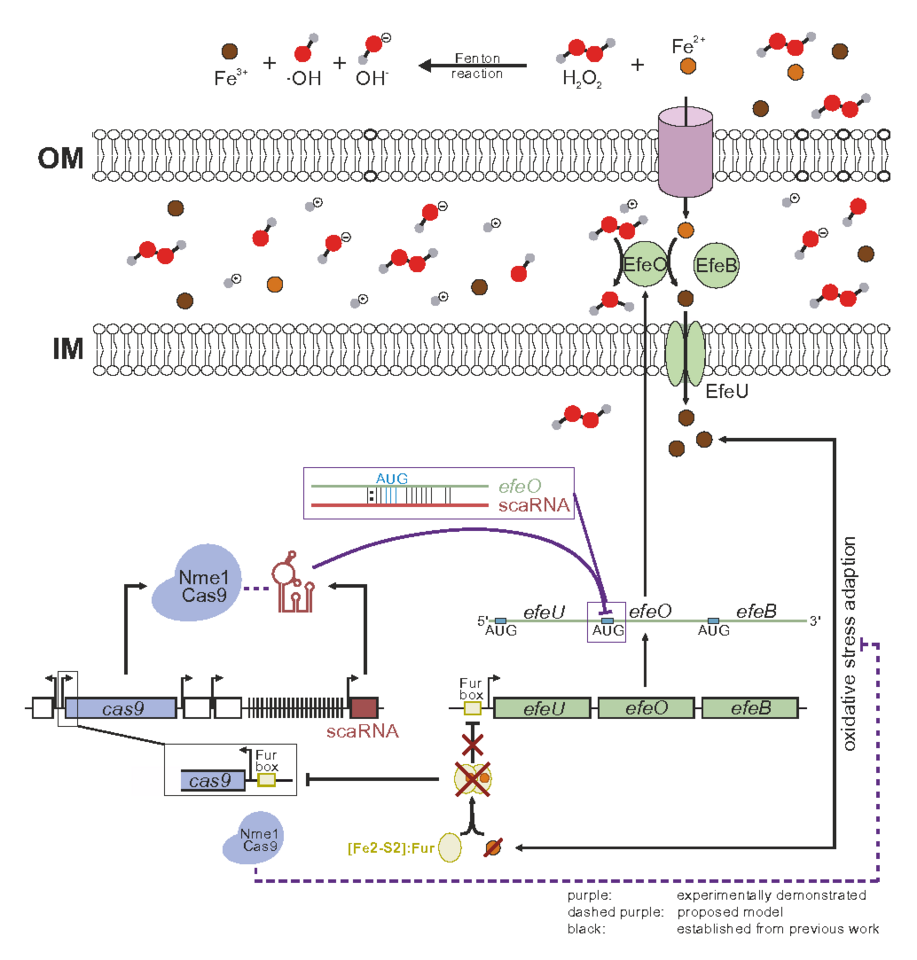
Neisseria meningitidis commonly colonizes the human nasopharynx without causing disease, but in rare cases it can cause severe infections such as meningitis or sepsis. To survive, the bacterium must regulate iron acquisition and its response to oxidative stress.
In this study, we show that a small CRISPR-associated RNA, termed scaRNA, directly binds to the messenger RNA of efeO and represses its translation. efeO encodes a putative component of the EfeUOB iron transport system. Inactivation of the scaRNA also altered bacterial fitness under oxidative stress conditions. The CRISPR-associated protein Nme1Cas9 bound and cleaved the scaRNA in vitro, but did not directly contribute to repression of efeO translation under the conditions tested.
These findings show that CRISPR-associated RNAs can have regulatory functions beyond their association with bacterial defence against foreign genetic material. The study provides new insights into post-transcriptional regulation, iron metabolism and stress adaptation in N. meningitidis. Although no immediate medical benefit has yet emerged from this, the study nevertheless lays the groundwork for further investigations into the physiology and adaptability of this human-pathogenic bacterium and, consequently, potentially new therapeutic approaches.
Zurück